
Traffic Collision Engineering Analysis: Uncovering the Hidden Causes of Crashes in Ontario
When a car crash happens in Ontario, most people naturally focus on driver mistakes. Was someone speeding? Driving distracted? Under the influence? While these factors matter, what if the road itself caused the collision? This is where Traffic Collision Engineering Analysis becomes essential - especially when legal action is being considered and to prevent future such collisions.
8 min read
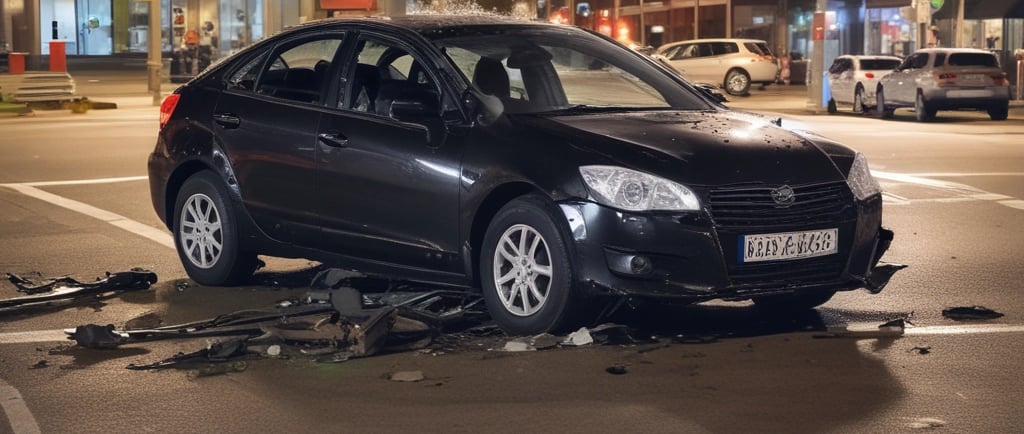
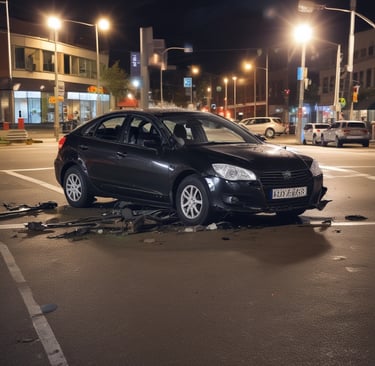
What Is Traffic Collision Engineering Analysis?
Traffic Collision Engineering Analysis is a detailed technical review that examines how the road's design, maintenance, and traffic controls may have contributed to a collision. Unlike police investigations that focus on driver behavior and immediate causes, this engineering analysis looks at the "stage" where the crash occurred.
Think of it this way: If a play goes wrong, you look at the actors' performances. But what if the stage had loose floorboards, poor lighting, or obstacles in the way? The stage setup matters just as much as the actors' actions. Roads work the same way.
This analysis is conducted by qualified traffic engineers who review documents provided by law offices, including:
- Motor Vehicle Accident Reports (MVAR)
- Forensic collision reconstruction reports
- Municipal design drawings and maintenance logs
- Traffic control device operation records
- Historical collision data for the location
- Photographs and measurements from the scene
The key point: This is not about blaming drivers or providing legal advice. It's about identifying physical facts and safety defects that may have been overlooked.
The Motor Vehicle Accident Report: Your Starting Point
Every serious collision in Ontario results in a Motor Vehicle Accident Report, or MVAR, completed by police officers at the scene. This document contains crucial baseline information:
- Date, time, and exact location
- Weather and lighting conditions
- Road surface conditions
- Diagram of vehicle positions
- Witness statements
- Officer observations about potential causes
The MVAR is the foundation, but it's just that - a starting point. Police officers are not trained traffic engineers. They document what they see but don't typically investigate whether a road's design meets safety standards or if maintenance failures created hidden dangers.
Many victims make the mistake of stopping with the MVAR. The police report might say "driver lost control," but why did they lose control? Was there an unexpected drop in pavement elevation? A sign blocked by overgrown trees? A traffic signal that changed too quickly? These are engineering questions.
Municipal Failures: When Cities and Towns Don't Keep You Safe
In Ontario, municipalities have a legal duty to maintain roads in a "state of repair that is reasonable in the circumstances" under the Municipal Act. This isn't just about filling potholes - it includes entire road systems and safety features.
Common Municipal Oversights That Cause Crashes
1. Poor Road Design
Roads must follow standards set by the Ontario Ministry of Transportation (MTO) and documented in manuals like the Ontario Traffic Manual (OTM). When municipalities ignore these standards, dangerous conditions result.
For example, a left-turn lane might be too short, forcing drivers to stop suddenly in fast-moving traffic. Or a curve might be too sharp for the posted speed limit, causing vehicles to slide off the road during rain.
2. Inadequate Signage
Traffic signs must be visible, properly placed, and maintained. Problems include:
- Signs blocked by tree branches or new buildings
- Signs faded by weather and sunlight
- Missing advance warning signs for sudden curves or stops
- Wrong sign sizes or placements that don't meet OTM standards
3. Traffic Signal and Streetlighting Issues
Traffic lights seem simple but involve complex timing and visibility requirements. Municipalities sometimes fail to:
- Provide adequate "all-red" clearance time between signal changes
- Maintain proper signal head visibility (not blocked by poles or other signs)
- Not maintaining adequate offset from the tip of center medians.
- Streetlights not meeting the photometric requirement.
4. Road Surface Problems
Beyond potholes, serious surface issues include:
- "Vertical deficiences" where one section of pavement is higher than another.
- Ruts that trap tires and cause loss of control.
- Inadequate drainage that creates standing water and hydroplaning risk.
- Poorly marked lane lines, especially at night or in rain.
The Maintenance Gap
Even well-designed roads become dangerous without proper maintenance. Municipalities keep maintenance logs that record inspections, complaints, and repairs. These logs sometimes reveal a pattern of neglect.
For instance, if citizens complained about a dangerous intersection for two years before a fatal collision, and the municipality took no action, this documented history becomes critically important. Maintenance records can show whether regular inspections actually happened or if they were just paperwork exercises.
Contractor Responsibility: When Private Companies Create Hazards
Many road projects in Ontario are built by private contractors, not municipal workers directly. These contractors are responsible for following approved designs and safety standards during construction and maintenance.
How Contractors Contribute to Dangerous Conditions
1. Construction Zone Hazards
Contractors must follow the Ontario Traffic Manual Book 7 (Temporary Conditions) for work zones. Common failures include:
- Placing barriers too close to active traffic lanes
- Confusing or inadequate temporary signs
- Sudden lane shifts without proper warning
- Leaving equipment or materials near the roadway
2. Substandard Workmanship
Sometimes the problem is poor quality work:
- Improper pavement transitions that create bumps or drops
- Incorrect sign installation (too high, too low, wrong angle)
- Malfunctioning traffic signals after repair work
- Inadequate road markings that wear off too quickly
3. Failure to Maintain During Projects
Contractors must maintain safe conditions throughout a project. If they create a hazard (like a steep drop-off at a pavement edge) and don't mark it properly, they may share responsibility for resulting crashes.
The key is that contractors, like municipalities, create physical evidence through their work. Engineering analysis examines this evidence against established safety standards.
Why Traffic Engineering Collision Analysis Is Critical: The Overlooked Factors
Most collision investigations stop at driver behavior and vehicle mechanics. Why? Because those are the most obvious factors. But overlooking road design and maintenance is like solving only half the puzzle.
What Forensic Experts and Lawyers Often Miss
1. Sightline Obstructions
A driver can't avoid what they can't see. Engineers calculate "sightlines" the area a driver must see to safely turn, cross, or stop. Trees, signs, fences, or even building corners that block these sightlines are design or maintenance failures, not driver errors.
2. Non-Standard Road Features
Every road feature has engineering standards. Curb heights, guardrail placement, median widths, shoulder slopes - all have specific measurements for safety. When municipalities deviate from these standards without proper justification, they create unexpected conditions that surprise drivers.
3. "Expected" vs. "Actual" Driver Behavior
Engineering analysis compares what drivers are reasonably expected to do versus what the road forces them to do. For example, if a highway exit ramp suddenly ends without proper deceleration length, drivers can't safely slow down even when paying attention. The road design creates an impossible situation.
4. Historical Collision Patterns
One crash might seem random. But engineering analysis examines whether the same type of crash happens repeatedly at the same location. If multiple vehicles have left the road at the same curve in a few years, this pattern suggests a road problem, not separate driver problems.
5. Traffic Control Device Malfunctions
Traffic signals and signs are mechanical devices that fail. Controllers malfunction, bulbs burn out, and signal timing plan errors can put a signal into sudden flash mode. Engineering analysis reviews maintenance records, designs and operational logs to see if a device was at fault.
6. The Knowledge Gap
Here's the reality: Most forensic collision reconstructionists may just focus on physics - speeds, angles, impact forces. Most attorneys may focus on law and liability. Neither may have deep training in traffic engineering standards, highway design manuals, or municipal maintenance requirements.
Traffic engineering is its own specialized field. Without this expertise, critical safety defects remain hidden, and victims may never learn the full story of why their crash occurred.
The Analysis Process: How It Actually Works
When an attorney or victim requests a Traffic Collision Engineering Analysis, here's what typically happens:
Step 1: Document Collection
The law office gathers all available materials:
- Police MVAR and photographs
- Witness statements
- Any forensic reconstruction reports
- Municipal records (design plans, maintenance logs, complaint history)
- Traffic volume and collision history data
- Weather reports
Step 2: Site Examination
A traffic engineer visits the collision location to:
- Take detailed measurements
- Photograph current conditions
- Test traffic control devices (signal timing, sign visibility)
- Document any physical defects
- Compare current conditions to municipal records
Step 3: Standards Review
The engineer compares findings to multiple authoritative standards mainly:
- Ontario Traffic Manual (all books)
- MTO Geometric Design Standards for Highways
- Municipal design guidelines
- Best practices from organizations like TAC (Transportation Association of Canada)
Step 4: Analysis and Report Preparation
The engineer prepares a technical report that:
- Documents factual physical conditions
- Identifies deviations from safety standards
- Explains how these deviations could contribute to collisions
- Provides objective, measurable findings
Important Limitation: The engineer works only with provided documents. If critical records are missing or unavailable, the analysis is limited accordingly. The report cannot speculate beyond available evidence.
Understanding the Impact (Without Promising Results)
It's crucial to understand what this analysis can and cannot do. This is not legal advice, and no engineer can guarantee a lawsuit's outcome. Legal cases depend on many factors: facts, evidence quality, applicable laws, legal arguments, and court decisions.
What Quality Analysis Provides:
1. Objective Facts
Instead of "the intersection seems dangerous," an engineer provides measurable facts: "The left-turn lane provides only 50 meters of storage, while MTO standards require 150 meters for this traffic volume."
2. Credibility
Qualified traffic engineers base opinions on established standards, not opinions. This carries weight in discussions with insurance companies and opposing parties.
3. Focused Legal Strategy
When attorneys understand specific road defects, they can tailor their legal approach more effectively. They know what questions to ask and what experts to consult.
4. Informed Decision-Making
For victims, this analysis provides clarity. Understanding all contributing factors - road conditions included - which helps you make informed decisions about how to proceed.
5. Road Safety Improvements
Sometimes these analyses lead municipalities to fix dangerous conditions, preventing future crashes. This benefits the entire community.
What Analysis Cannot Do:
- Predict judge or jury decisions
- Replace legal representation
- Create evidence that doesn't exist
- Overcome other case weaknesses unrelated to road conditions
- Guarantee financial compensation
Every case is unique. The analysis provides important technical information, but that is only one piece of a larger legal puzzle.
Real-World Application in Ontario
Consider a typical scenario: A driver loses control on a rainy night and crashes on a municipal road. The MVAR states "failure to drive according to conditions."
A Traffic Collision Engineering Analysis might discover:
- The pavement hasn't been repaved in 25 years, creating a smooth, polished surface that doesn't drain properly
- The posted speed limit is 10 km/h higher than what current guidelines recommend for the curve geometry
- Three similar crashes occurred at the same location in the past five years, with citizen complaints filed but no action taken
- Road markings are worn and nearly invisible at night, especially when wet
These are physical, measurable facts that add context to the driver's actions. They don't excuse driver responsibility but provide a more complete picture of why the crash occurred.
Ontario courts recognize that municipalities must maintain safe roads. The Municipal Act and case law establish this duty. However, proving a breach of that duty requires technical evidence. This is where engineering analysis becomes invaluable.
Conclusion: Seeing the Full Picture
After a serious collision in Ontario, victims and attorneys face a complex situation. While driver behavior is routinely investigated, road design and maintenance factors are often missed simply because no one with the right expertise looked for them.
Traffic Collision Engineering Analysis fills this gap. By systematically examining the physical environment against established safety standards, qualified engineers can identify dangerous conditions that contributed to a crash. This technical evidence, combined with proper legal representation, helps ensure all responsible parties are held accountable.
For collision victims: If you've been in a serious crash, ask your attorney whether road conditions might have been a factor. Don't assume it was solely driver error.
For attorneys: Consider whether engineering analysis could strengthen your case, especially when collisions occur at known problematic locations or involve unusual circumstances.
Remember - roads should be designed and maintained to be "forgiving" of minor driver errors and to accommodate expected human behavior. When they aren't, people get hurt. Understanding the full story of how a collision occurred - including the road's role - is simply good investigation practice.
The goal isn't to shift blame but to uncover truth. Every Ontarian deserves safe roads, and when preventable design or maintenance defects contribute to tragedy, that story deserves to be told - clearly, factually, and professionally.
This article provides general information about traffic engineering analysis and does not constitute legal advice. Consult with a qualified attorney for legal guidance specific to your situation.
Get in touch with TERDAC today.
© 2026. TERDAC, All rights reserved.